


Quick Link
Quick Contact
Address
No.89,Pingliang Avenue, Nanjing, China
Tel
+86-178-9884-8998
E-mail:
myuav@myuav.com.cnOur Newsletter
Subscribe to our newsletter for discounts and more.

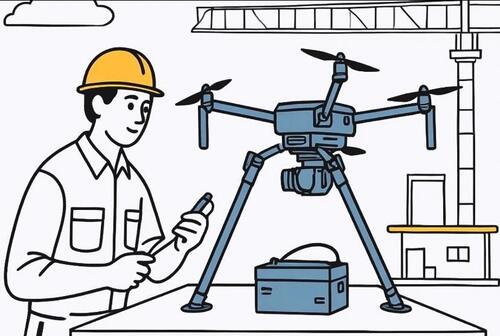
A tethered drone connects to a ground power supply and control unit via a high-strength optoelectronic composite cable, enabling continuous power supply, low-latency data transmission, and stable hovering. It offers significant advantages in long-duration fixed-point operation scenarios and serves as a crucial supplement to traditional battery-powered drones. Below are the core Q&As.
Q1 What are the core differences between tethered drones and regular battery-powered drones?
A typical system consists of three core modules, all indispensable:
1.Aerial Platform: Mostly multi-rotor (some compound-wing), featuring redundant design and high-precision flight control, with reserved payload interfaces and power/fiber optic channels.
2.Tether Cable: A high-strength optoelectronic composite cable integrating power supply, data transmission, and physical traction functions, meeting industrial-grade requirements such as wind resistance, flame retardancy, and wear resistance.
3.Ground System: Power supply unit (municipal electricity, generator, emergency power supply), cable winding/unwinding device, control station, and monitoring terminal; some support rapid deployment and vehicle/ship-mounted installation.
1.Deployment Speed: Industrial-grade products can usually be set up and launched within 5–10 minutes, with some emergency models even faster; vehicle-mounted/portable designs further enhance deployment efficiency.

